Good Support Isn’t Hustle, It’s a System: Why Clarity and Cadence Matter More as Franchise Systems Grow

By Stephanie Benze, Director of Education at AC Inc.
In This Article You’ll Learn How To:
- Recognize when well-intentioned support is becoming unsustainable
- Understand the leadership shift that happens as franchise systems scale
- Avoid turning your corporate team into a reactive call center
- Use cadence and structure to protect your people and your brand
- Build a support system that scales without losing soul
When “Call Anytime” Becomes the Only Strategy
Once upon a time, I inherited a franchise support structure built on the best of intentions.
The unspoken rule was simple, and incredibly common in founder-led organizations:
“Call whenever. We’ll be there.”
And to be clear: that mindset comes from care. It’s what makes founders great in the early days. You’re scrappy. You’re close to the work. You know every franchisee by name. You feel personally responsible for their success, because in many ways, you are.
But what works at 10 units starts to wobble at 20.
And what feels noble at 20 becomes unsustainable at 80.
As the network grew, the pressure changed. Support started to feel heavier. Team members were stretched thin. Expectations were inconsistent. Everyone was working hard, but no one felt steady.
We weren’t failing. We were scaling.
And scaling exposes what’s missing.
What we didn’t have was a support system.
We had a support personality.
And personalities don’t scale.

When the Doers Become the Leaders (Without a Map)
In many franchise systems at this stage, there aren’t formal coaches yet.
Instead, support falls to:
- Department leaders
- Subject-matter experts
- The corporate “doers” who know the work best
These people are the backbone of the organization… but they’re also the ones most likely to get unintentionally “promoted” into leadership. Yes, coaching is a leadership role.
They’re suddenly asked to train, guide, and support franchisees, often without wanting the role, being prepared for it, or having clarity on what “good support” actually looks like.

So the system does what it knows.
It reacts.
The corporate team becomes a call center.
Reactive. Always available. Always fixing.
And honestly? It can feel like good service. It can even feel like the right thing. Franchisees are happy in the moment because someone saved the day. Leaders feel relief because a problem got handled.
But here’s the catch:
That version of support scales dependency, not capability.
It makes corporate the hero, not the guide.
And it slowly trains franchisees to escalate instead of execute.
This is where franchising mirrors a broader leadership problem Simon Sinek calls out often: we place people into leadership roles without ever helping them make the mindset shift from doing to leading.
And this dynamic was driving me crazy, because I could feel it wasn’t working, but I didn’t yet have language or a framework to break the cycle we’d created.
The Cycle We Didn’t Mean to Create
We started trying to fix it. Slowly. Imperfectly.
We talked about structure.
We experimented with cadence.
We tried to clarify expectations.
And we stumbled. A lot.

Some changes helped… and others accidentally made things worse. There were plenty of moments where we defaulted back to “just handle it” because it felt faster, easier, and safer in the moment.
That’s the trap: chaos makes urgency feel logical.

But looking back now, years later, with more operational and franchise experience, I can clearly see the micro shifts that began to change everything:
- Letting systems carry the weight instead of people
- Asking before answering
- Clarifying expectations instead of assuming them
- Creating rhythm instead of reacting to noise
Those shifts weren’t glamorous. They didn’t look like “big growth moves.”
They looked like discipline.
And they changed everything.
The Role Shift Franchisors Can’t Ignore
Here’s the shift many founders and franchisor leaders underestimate:
You’re no longer selling the product or service the franchisee is.
The thing you originally built your business on, the service, the widget, the expertise, is no longer your primary job. Your franchisees are now the ones doing that work. They’re trying to be the business owner you once were.
And what it takes to succeed as an independent business owner is very different from what it takes to support hundreds of people trying to do the same.
This is where many franchise systems get stuck.
Founders and early leaders often continue to operate as expert doers and problem-solvers. That mindset makes perfect sense in the early days, it’s how the business survives. But as the system grows, the role has fundamentally changed.
Your product is no longer the service.
Your product is support.
Specifically:
- Systems that help franchisees think like owners
- Clear expectations
- Repeatable coaching processes
- Tools that build capability, not dependency

Decades of research back this up.
In The Five Stages of Small Business Growth, Neil C. Churchill and Virginia L. Lewis explain that organizations outgrow founder-centric leadership and must shift toward systems, delegation, and structure as complexity increases. Growth doesn’t stall because leaders fail, it stalls because the role hasn’t evolved.
Larry Greiner’s Growth Model, outlined in Evolution and Revolution as Organizations Grow, reinforces this idea, showing that each phase of growth ends in a leadership “crisis” that requires a new way of operating. What created success in the last phase actively limits the next one.
We’ve also seen this play out in real time through the work of Rebecca Monet and the team at Zorakle Profiles, who help franchisors assess where their organization actually sits within these stages of growth. Their data-backed approach gives leadership teams clarity on whether their current structure matches their current level of complexity, and where misalignment is creating friction.
That same insight becomes critical in franchise development. When brands understand their stage of growth, they’re far better equipped to identify right-fit franchisees, owners who are aligned with the support model, expectations, and maturity of the system they’re joining, not just the opportunity on paper.
In franchising, this crisis often shows up when leadership continues acting like the expert operator instead of stepping fully into the role of architect of support.
The faster franchisors make this mindset shift, the sooner their system moves from reactive growth to sustainable scale.
Cadence Is the Backbone of Scalable Coaching
Impact absolutely comes from personality and approach.
Great coaches connect. They read the room. They adapt. They know when to push and when to pause.
But cadence and coaching structure are what multiply that impact.

Cadence creates rhythm.
Tools and structure create accountability.
Together, they create momentum.
Without them, even the best coaches end up relying on:
Personal effort instead of shared ownership
Memory instead of process
Urgency instead of intention
When coaching has consistent cadence and clear tools:
- Franchisees know what to expect and what’s expected of them
- Progress doesn’t disappear between sessions
- Accountability lives in the system, not the coach’s head
- Coaches stop carrying the full mental load
This is something we see constantly through AC Inc.’s work and inside the ACcelerator Program. Performance doesn’t change because a coach becomes more charismatic. It changes because the structure supports follow-through.
Cadence without tools creates busywork.
Tools without cadence create binders on shelves.
Together, they create sustainable forward motion.
That’s how coaching stops feeling reactive and starts driving real growth.
Fix the Foundation Before You Stack the Floors
Here’s a question worth sitting with:
Is your support foundation strong enough to carry what you’re building on top of it?
Foundations without mortar are weak.
They might look solid at first, but they can’t support the walls you stack above them.
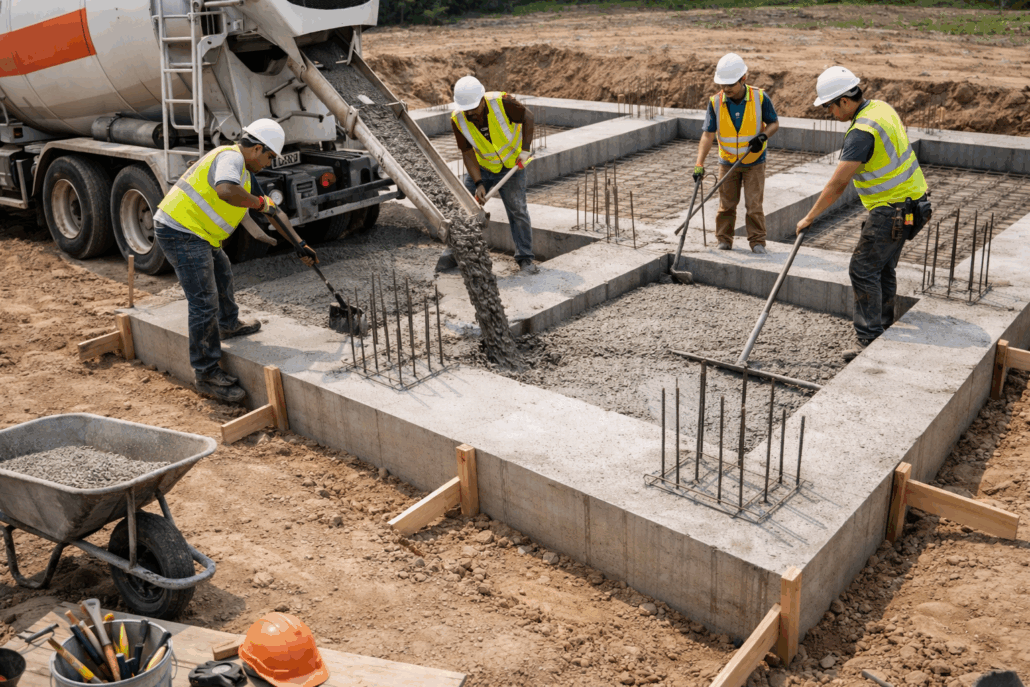
In franchise systems, the “bricks” often go in fast:
- New units
- New markets
- New initiatives
- New demands on support
But if the mortar, process, cadence, and systems, is missing, pressure exposes the cracks.
Support becomes inconsistent.
People become the system.
And leadership spends more time holding things together than moving forward.
This is where many franchisors feel like they’re constantly behind, even while growing.
The solution isn’t slowing growth.
It’s strengthening the foundation so growth doesn’t create instability.
When support systems are designed intentionally:
- Coaches aren’t forced into hero mode
- Franchisees experience clarity instead of chaos
- Leadership gains leverage instead of liability
Strong foundations don’t limit growth.
They make it possible.
Bottom Line: Clarity Beats Heroics
If your support team feels stretched, reactive, or stuck in constant crisis, it’s not a motivation problem.
It’s a design problem.
Support isn’t hustle.
It’s structure.

And when the structure is right:
- Coaches stop burning out
- Franchisees experience consistency
- Leaders stop being the bottleneck
- Growth becomes sustainable instead of chaotic
That’s how systems scale, with intention and purpose.
Ready to Build Support That Actually Scales?
At AC Inc., everything we do, from Strategic Growth Coaching to the ACcelerator Program, is designed to help franchisors and support teams build a support system that works at every stage of growth.
Not louder.
Not longer hours.
Just better designed.
Want More Bite-Sized Coaching Tools?
Subscribe to the weekly newsletter for insights and tools that help you support franchisees, and the people who support them, with clarity and confidence.